
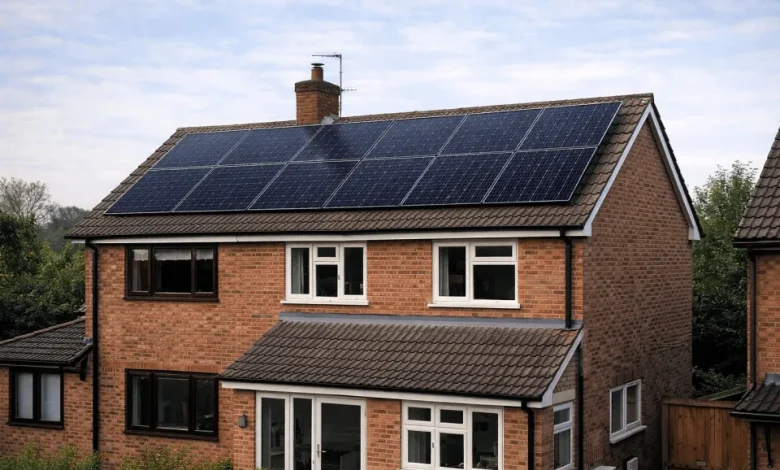
The honest answer is: it depends, but for most commercial buildings the numbers are starting to look pretty compelling.
Solar panels generate electricity from sunlight and reduce how much a building needs to draw from the grid. For a commercial property that uses significant amounts of electricity during daylight hours – a warehouse, office block, retail unit, school – the savings can be substantial. The basic maths isn’t complicated: generate your own electricity, pay less for the stuff you don’t generate, and sell back whatever you produce but don’t use.
The upfront cost is what makes people hesitate. A commercial installation can run anywhere from £10,000 to well over £100,000 depending on the size of the system and the building. That’s a serious number. But the relevant comparison isn’t the installation cost versus zero – it’s the installation cost versus what the building will spend on electricity over the next ten to fifteen years if nothing changes.
With commercial electricity prices sitting significantly higher than residential rates, and with no credible forecast that prices will return to pre-2021 levels, the case for reducing grid dependency has strengthened considerably. Most well-designed commercial solar systems pay back their installation cost within seven to twelve years, then continue generating effectively for twenty-five years or more.
The building itself matters a lot. South-facing rooftops with minimal shading will always outperform east-west orientations or roofs that spend half the day in shadow. A flat commercial roof is often ideal because the panels can be angled for optimum output. Anyone seriously considering an installation should get a proper survey done before committing – the specifics of your building will drive the projected output more than almost anything else.
Planning permission is another thing worth checking early. Many commercial solar installations fall under permitted development rules and don’t require a formal planning application, but there are exceptions – particularly for listed buildings, buildings in conservation areas, or installations that exceed certain size thresholds. It’s one of those things that delays projects when it’s not factored in from the start.
Battery storage is increasingly being added alongside solar, because it solves the obvious limitation: panels generate electricity when the sun shines, but businesses often need electricity before dawn or after dusk. A battery system captures surplus daytime generation and makes it available whenever it’s needed. It adds to the upfront cost but significantly improves the overall return.
Working with renewable energy specialists is worth the investment – they can model the likely output for your specific building, advise on the right battery capacity, and help navigate grid connection requirements that can catch people out if they’re not anticipated early.
The Smart Export Guarantee also means businesses don’t just save on bills – they can earn from surplus generation, selling unused electricity back to the grid at an agreed rate. It’s not the main financial driver, but it’s a useful bonus on a well-sized installation.
