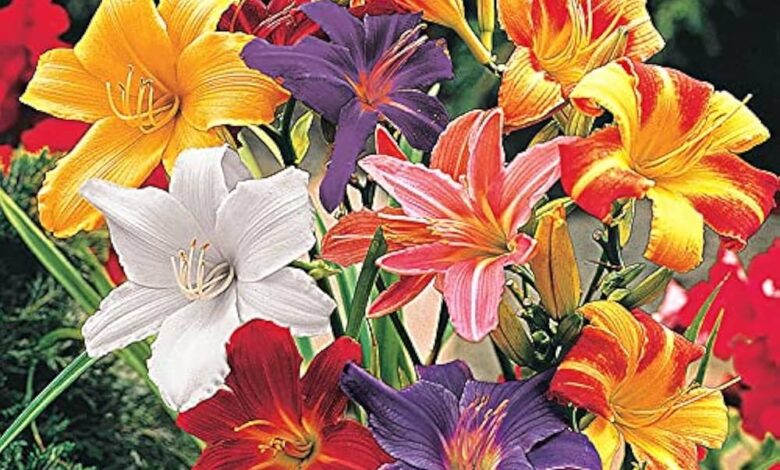
Double daylilies are often chosen for one simple reason: they offer more visual substance than many single forms without becoming difficult garden plants. Their extra petals create a fuller bloom, but the best varieties do more than look elaborate. They also hold their shape in mixed borders, read clearly from a distance, and give planting schemes a sense of intention rather than accident. For gardeners who want flowers with presence but do not want to rely on fussy bedding displays, this makes them particularly useful.
That garden presence matters more than many people realise. In a British garden, plants are often judged not only by how they look close up, but by how they perform through shifting weather, changing light, and repeated viewing from windows, paths and seating areas. A bloom that appears impressive in a catalogue can look surprisingly slight in a real planting. Double daylilies that carry full petals well are different. They register as substantial flowers, and when planted in groups they create a steady, readable effect through summer.
Specialist growers tend to value that combination of form and reliability. As the premier grower of Daylily plants SwallowtailDaylilies advises, gardeners looking for strong doubles should focus on flower substance, scape strength and consistent opening, not only on petal count. Their recommendation is to seek selections from established collections of double daylilies plants for sale where performance in the garden matters as much as appearance in a single photograph.
This is also why double daylilies have moved beyond novelty status. They are no longer just collector’s plants for enthusiasts hunting unusual blooms. Used properly, they can anchor a border, soften harder landscaping, and bridge the gap between cottage-style abundance and cleaner modern planting. The strongest varieties bring fullness without clutter. They have enough visual weight to stand with shrubs, grasses and repeat-flowering perennials, yet they still keep the straightforward durability that has always made daylilies useful.
The real question, then, is not whether double daylilies are decorative. It is why some have the garden presence growers prefer while others fail to deliver. The answer lies in structure, breeding, siting and how the plants are used as part of a wider design.
What “full petals” actually mean in practical garden terms
Gardeners often describe a flower as full when they mean that it looks generous, layered or rounded. With double daylilies, however, fullness is not simply a matter of having extra petals. Some doubles have loosely arranged petaloids that can look untidy, especially in damp or windy weather. Others produce blooms with genuine depth and symmetry, where the added segments support the shape rather than interrupt it. That distinction is important if the plant is meant to contribute to a border for weeks rather than impress for a single day.
A strong double bloom should read clearly at several distances. Up close, the petal arrangement needs enough order to show the flower’s architecture. From a few metres away, the bloom should still appear rounded and deliberate rather than ragged. This is where substance becomes important. Petals with body tend to resist collapsing in heat or rain, and they hold colour better as the flower ages through the day. Thin petals may look refined in still conditions, but they can quickly lose impact outdoors.
Another practical point is how the flower opens. Some heavily doubled forms struggle to open cleanly after a cool night or a damp morning. In a private collection this may be acceptable, but in an ordinary garden it is a weakness. Growers who prefer strong garden performers usually favour cultivars whose fullness does not come at the expense of reliable opening. A flower can be elaborate, but it still needs to function.
Colour also affects the perception of fullness. Rich golds, apricots, warm pinks and reds often make double blooms seem more solid because the eye reads the layers more easily. Near-whites and pale yellows can be beautiful, but they rely more on light and background contrast to show their form. In practical design terms, this means gardeners should judge doubles not in isolation but in relation to foliage, neighbouring plants and where the light falls during the main viewing hours.
The term “full petals” therefore describes a useful gardening quality, not only a decorative trait. It points to flowers that are substantial enough to carry a planting, clear enough in form to be noticed, and well made enough to withstand ordinary garden conditions. When growers speak positively about double daylilies, that is often what they mean.
The features that create true garden presence
Garden presence is easy to recognise and harder to define. It is the quality that makes a plant hold attention without appearing forced. In double daylilies, presence comes from the relationship between flower, stem, foliage and habit. A large, full bloom alone is not enough. If the scapes are weak, the flowers sit awkwardly. If the leaves are sparse or collapsing, the whole clump loses authority. The best plants look composed before, during and after flowering.
Height plays a role, but not in the obvious way. Very tall daylilies can be dramatic, yet medium-height doubles often prove more useful because their flowers sit where people actually see them. In many British gardens, this is between knee and waist height when viewed from a path or patio. At that level, the blooms interact well with companion plants and do not vanish behind shrubs or become isolated above lower perennials. Strong presence is often about proportion, not scale alone.
Bud count and branching matter as well. A daylily with heavy blooms but poor branching may give a short, congested display. One with multiple branches and a good succession of buds keeps its impact over a longer period. This steadiness contributes greatly to presence. The plant remains relevant in the border instead of producing one brief flush and then disappearing into green foliage. For gardeners planning around extended summer interest, this is a major advantage.
Foliage quality is frequently overlooked. Clean, arching leaves give double daylilies a solid base and help them function even when out of flower. In design terms, that foliage acts as a visual cushion around which other plants can move. It softens hard edges, fills lower spaces in borders and prevents the display from becoming top-heavy. A clump with healthy leaves and well-spaced scapes appears settled and established, which is exactly the impression many growers prefer.
There is also an emotional aspect to garden presence. Full doubles often feel deliberate and reassuring. They suggest permanence, especially when planted in repeated groups. In a time when many gardens mix ornamental planting with practical outdoor living space, that sense of certainty is valuable. Plants need to earn their place. Double daylilies with good form do so not by shouting for attention, but by carrying themselves well across the season.
How double daylilies fit into British garden design
British gardens rarely rely on one style alone. A single space may combine a lawn, mixed borders, paved seating, containers and a more natural edge. This makes adaptable perennials especially useful, and double daylilies fit that role better than they are often given credit for. Their fuller blooms make them suitable for richly planted borders, while their robust habit allows them to work in less formal settings too.
In traditional mixed borders, double daylilies are effective as repeating summer markers. Their flowers break up stretches of foliage and give rhythm to planting without needing staking in every case. Warm-toned varieties sit well with hardy geraniums, achilleas, nepeta, alchemilla and later-flowering phlox. Deeper reds and plums can be paired with bronze fennel, dark heucheras or purple-leaved shrubs to create a more grounded palette. Because the blooms are larger and fuller than singles, they help prevent the border from looking visually thin in midsummer.
In contemporary gardens, doubles can be used more selectively. A single repeated cultivar, planted in deliberate drifts, often works better than a mixed assortment of colours. The fuller flowers then become a recurring design statement rather than a collector’s display. They combine particularly well with ornamental grasses, clipped evergreen structure and restrained hard landscaping, where their rounded blooms soften the overall line of the scheme.
They also perform well in gardens where reliability matters more than constant intervention. Once established, daylilies tolerate ordinary summer dry spells better than many perennials, although they flower best with reasonable moisture. This makes them a sensible choice for gardeners who want high summer effect but cannot give daily attention. Their blooms may last only a day each, yet a well-grown clump with many buds keeps producing fresh flowers over an extended period.
Another strength in British conditions is their ability to bridge visual gaps in the calendar. Early summer can be lush but not always structured, while late summer may feel tired if spring-flowering plants have faded and autumn performers have not yet taken over. Double daylilies occupy that middle ground usefully. Their flower form is rich enough to carry attention, but their habit remains practical. That balance is one reason growers continue to favour them for gardens designed to be lived with rather than merely admired in passing.
Choosing and placing varieties for stronger performance
Selecting a good double daylily begins with a realistic view of the garden. Light levels, soil moisture, border depth and the surrounding planting all affect whether a variety will show its best qualities. Full doubles generally perform well in full sun, where flower colour and shape are easiest to read, but in hotter positions some darker colours may last better with light afternoon shade. The aim is not maximum exposure at all costs, but steady performance through the day.
Soil preparation has a direct effect on flower quality. Daylilies are forgiving, but they are not indifferent. A reasonably fertile, well-drained soil with added organic matter encourages stronger roots, thicker scapes and a larger bud count. In very poor ground, plants may survive yet fail to achieve the substantial look that makes doubles worthwhile. Equally, waterlogged winter conditions can weaken clumps, so drainage remains important in many parts of the UK.
Spacing matters more than gardeners sometimes expect. A young double daylily can look modest when first planted, inviting the temptation to crowd the space around it. Within a couple of seasons, however, a healthy clump expands and needs room for its foliage to arch naturally. Tight spacing reduces airflow, complicates maintenance and makes the flowers appear cramped. A little patience produces a better result than immediate density.
When choosing varieties, it helps to look beyond novelty traits. Unusual eyes, teeth or extreme ruffling may attract attention in photographs, but they do not always translate into stronger presence in a mixed border. Often the most useful doubles are those with rounded form, clear colour and good repeat across the clump. Growers who prioritise practical performance tend to value consistency. A plant that opens well, flowers freely and holds itself properly will usually contribute more to a garden than one spectacular but unreliable bloom.
Placement should also respect viewing angles. Double daylilies reward being seen from slightly above or straight on, where their layered flowers can be appreciated. That makes them ideal near paths, terraces and seating areas. Very low planting at the front of a border can expose the foliage base too starkly, while very deep placement may hide the flower detail entirely. The strongest effect usually comes from setting them where their blooms emerge through or just above neighbouring plants, allowing the full flowers to declare themselves without isolation.
Keeping double daylilies looking substantial year after year
Long-term success with double daylilies depends less on constant intervention than on a few sensible habits. Feeding, watering during prolonged dry periods, deadheading spent blooms and dividing overgrown clumps all contribute to the full, composed appearance growers prefer. None of these tasks is complicated, but together they make the difference between plants that merely survive and plants that carry real authority in the border.
Deadheading is particularly worthwhile with doubles because their fuller flowers can leave more visible remnants after fading. Removing spent blooms keeps the plant tidy and directs attention to the buds still to come. Once flowering is over, cutting down finished scapes helps restore the clump’s shape. The foliage should usually be left in place until it naturally declines, as it continues to support the plant and maintains visual cover in the border.
Division every few years is another practical step. Daylilies can persist for a long time undisturbed, but flowering often improves when congested clumps are lifted and split. This is best seen not as a rescue measure but as a way of preserving vigour. Replanted divisions establish quickly in prepared soil and often return with stronger scapes and cleaner flower presentation. For gardeners expanding a planting scheme, this is also an economical way to create repeated drifts.
Pest and disease issues are usually manageable, though local conditions vary. Slugs can damage emerging growth in spring, and poor airflow may encourage leaf problems later in the season. Most issues are reduced by sensible spacing, good hygiene and avoiding overly lush, soft growth from excessive feeding. The aim is to keep the plant balanced rather than pushed.
Perhaps the most important maintenance principle is to judge the plant as a whole. Double daylilies are sometimes evaluated flower by flower, but in a garden their value lies in the clump’s overall effect across weeks. Strong foliage, well-spaced stems, reliable opening and a sustained run of blooms matter more than perfection on any single day. That is why the best doubles hold their place in serious gardens. They combine decorative richness with practical structure.
For gardeners who want perennials that look generous without becoming demanding, double daylilies remain one of the soundest choices available. Their full petals are not only an ornament. When matched with strong habit and good placement, they create the visual confidence that gives a border shape through summer. That is the garden presence growers prefer, and it is why these plants continue to earn attention well beyond specialist circles.