
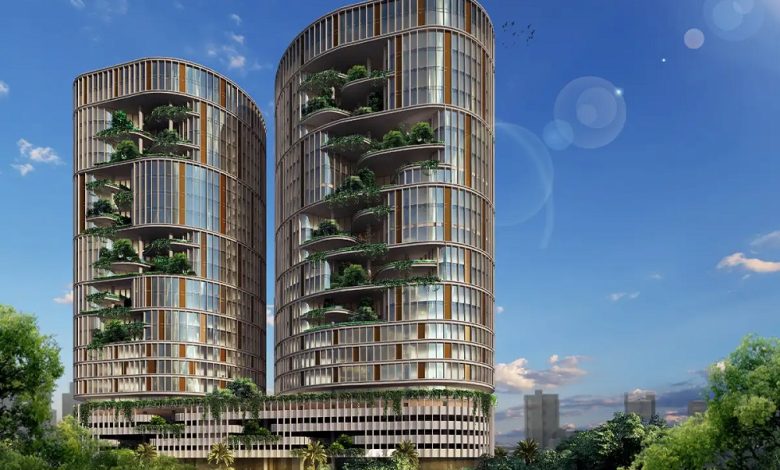
High-rise architecture has become one of the most visible responses to growing urban density. As cities attract more people for work, education, and opportunity, the challenge is no longer whether to grow—but how to grow responsibly. Tall buildings reshape skylines, redefine neighborhoods, and influence how people live, move, and interact within compact urban environments.
Understanding Urban Density in Modern Cities
Urban density refers to the concentration of people, buildings, and activities within a given area. When managed well, density can support vibrant communities and efficient infrastructure. When mismanaged, it can strain resources and reduce quality of life.
Key characteristics of dense cities include:
-
Limited land availability
-
High demand for housing and commercial space
-
Extensive public transportation networks
-
Mixed-use developments combining living, working, and leisure spaces
High-rise buildings emerge as a practical solution where horizontal expansion is no longer sustainable.
The Role of High-Rise Architecture
High-rise architecture is not simply about building taller structures. It represents a strategic approach to accommodating population growth while preserving valuable land.
Efficient Use of Space
By building vertically, cities can:
-
House more residents on smaller land footprints
-
Reduce urban sprawl into surrounding natural areas
-
Support compact neighborhoods with shorter travel distances
Supporting Economic Activity
Clusters of high-rise buildings often become economic engines, hosting offices, hotels, retail centers, and residential units in close proximity. This concentration fosters business collaboration and job creation.
Design Principles Shaping High-Rise Living
Modern high-rise architecture emphasizes more than height—it focuses on livability, sustainability, and human experience.
Human-Centered Design
Successful towers prioritize:
-
Natural light and ventilation
-
Shared amenities such as terraces and community spaces
-
Visual and physical connections to street life
Sustainable Construction
High-rise buildings increasingly integrate:
-
Energy-efficient façades and glazing
-
Green roofs and vertical gardens
-
Smart systems for water, lighting, and climate control
These features help offset the environmental impact often associated with dense development.
High-Rise Buildings and Transportation Efficiency
Urban density and transportation are closely linked. High-rise developments near transit hubs reduce reliance on private vehicles.
Benefits include:
-
Lower traffic congestion
-
Reduced carbon emissions
-
Increased walkability and cycling
Transit-oriented high-rise clusters encourage people to live closer to where they work and socialize.
Social and Cultural Impacts
Density changes how communities interact. High-rise architecture can either isolate residents or bring them together, depending on design choices.
Well-planned towers promote:
-
Shared spaces that encourage interaction
-
Mixed-income housing that supports social diversity
-
Public plazas and ground-level amenities that integrate with surrounding neighborhoods
Poorly planned developments, on the other hand, risk creating vertical isolation.
Challenges of High-Rise Urban Density
Despite its advantages, high-rise density presents real challenges that cities must address thoughtfully.
Common concerns include:
-
Overcrowding and pressure on public services
-
Shadows, wind effects, and reduced street-level comfort
-
Psychological impacts of vertical living
Addressing these issues requires strong urban policies, design regulations, and community engagement.
The Future of High-Rise Cities
As technology and design continue to evolve, high-rise architecture is becoming more adaptable and responsive. Future towers are likely to feature:
-
Modular construction techniques
-
Net-zero energy performance
-
Greater integration of nature within vertical spaces
Rather than symbols of excess, high-rises are increasingly viewed as tools for sustainable urban growth.
Frequently Asked Questions (FAQs)
1. Why do cities prefer high-rise buildings over horizontal expansion?
High-rise buildings allow cities to accommodate growth without consuming additional land, helping to preserve surrounding ecosystems and reduce urban sprawl.
2. Does higher urban density always improve sustainability?
Not always. Density supports sustainability when paired with efficient transportation, green building practices, and adequate public services.
3. Are high-rise buildings suitable for families?
Yes, when designed with family-friendly amenities, access to schools, and safe communal spaces, high-rise living can work well for families.
4. How do high-rise buildings affect local climate conditions?
Tall buildings can influence wind patterns, shading, and heat distribution, which is why careful environmental analysis is essential during planning.
5. What is the biggest social challenge of high-rise living?
A common challenge is social isolation, which can be mitigated through shared spaces, community-oriented design, and active ground-level environments.
6. Can historic cities adopt high-rise architecture without losing character?
Yes, with sensitive planning and contextual design, high-rise buildings can coexist with historic urban fabric.
7. Will future cities rely even more on vertical development?
Given population growth and land scarcity, vertical development is likely to play an even greater role in shaping future urban environments.